
Heart of the Matter: Why Black Women's Heart Health Can't Wait
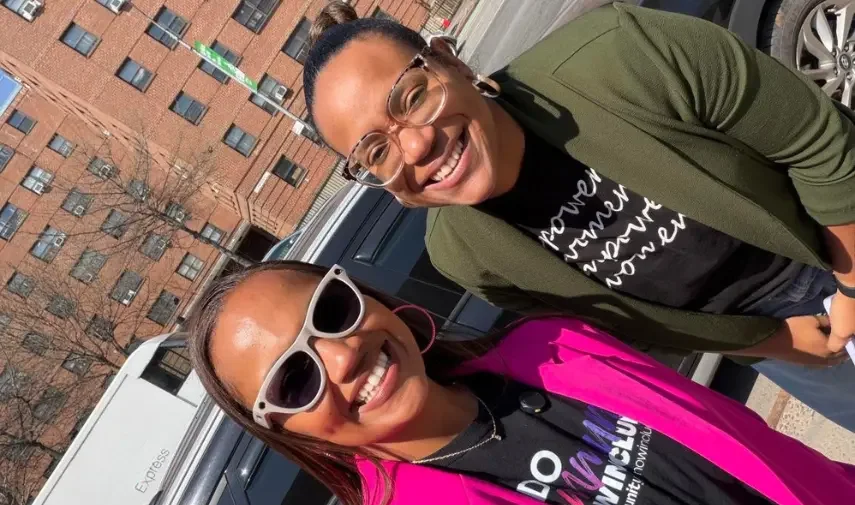
Half of Black women in the United States have some form of cardiovascular disease, according to the American Heart Association, and Black women are more likely to die of heart disease, and at younger ages, than white women. This is a major health problem that rarely gets the attention it needs. There is a big gap between what the medical numbers show and the actual care our neighborhoods get. Events like “Heart of the Matter” are built to completely close that gap and help people get the support they deserve.
On April 10, Melanin Thriving joined our partner Acclinate, along with Mount Sinai and Novo Nordisk, at the Thomas Jefferson Recreation Center in Harlem for a community health event built around one simple truth: Black women deserve to be at the center of conversations about their own health.
More Than a Screening
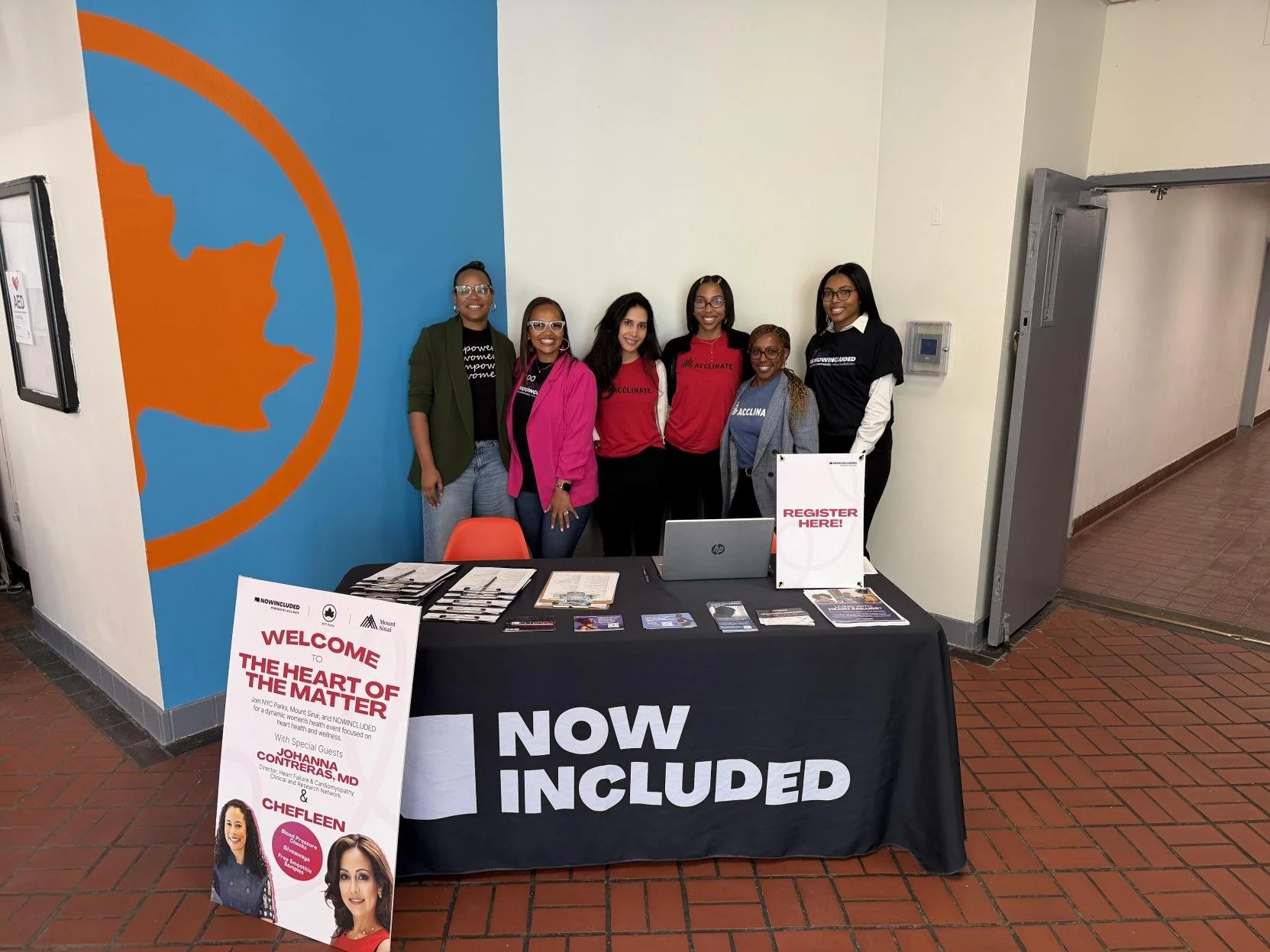
The event brought together community members, healthcare providers, and researchers for a real conversation about cardiovascular or heart health, with free blood pressure screenings, wellness resources, and a chef-prepared meal by Chefleen, because health starts with how we nourish ourselves every day. But Heart of the Matter was also about something bigger: connecting Black women to the research that should be designed to serve them.
"True health equity isn't about dropping a flag in a neighborhood for one day and leaving. It’s about showing up early, staying often, and investing in real relationships. Events like 'Heart of the Matter' prove that when we bring trusted resources, good nourishment, and partners like Melanin Thriving directly to the streets, our community is ready to take control. We are equipping Black women with the tangible tools and community support they deserve to make proactive decisions for their own futures."
— Tiffany Whitlow, Acclinate Co-founder and Chief Development Officer
Our Role as Trusted Connectors
Melanin Thriving's partnership with Acclinate is built on a simple premise: community trust is the most powerful force in health engagement and it must be earned in the right spaces, by the right messengers.
Acclinate's NOWINCLUDED platform was built to turn that trust into action by empowering underrepresented communities with culturally-relevant resources, real human connection, and clinical research opportunities that may not have otherwise been offered.
Our role is to be the bridge. Melanin Thriving shows up in the spaces where our community already is, with information from voices they already trust. Acclinate and NOWINCLUDED open the door to the research side. Together, we are making sure Black women are being invited to and centered in the conversation.
It's Time the Research Showed Up for Black Women
Only one in five Black women believes she is at risk for heart disease, and only two-thirds are aware of the symptoms of a heart attack — a knowledge gap with life-or-death consequences. Even when Black women try to get medical help, they face two big challenges at once: their race and their gender. Because of this, they have historically been left out of clinical research studies.
Black Americans comprise 13% of the U.S. population but just 5% of clinical research participants, while suffering from heart conditions and premature death. That absence or representation has real consequences — it creates uncertainty about how medications interact with our bodies and leaves the next generation of health breakthroughs incomplete.
Importantly, the evidence is clear: underrepresented people are not necessarily underrepresented because they are unwilling to participate. In many cases, the strongest predictor of participation is simply being asked. This tells us that the barrier isn't reluctance. It's access, awareness, and trust.
NOWINCLUDED is working to change that by offering a safe space for people in underrepresented communities to be heard and supported throughout their health journeys.
"At HCN Global and Melanin Thriving, we believe health equity is built relationship by relationship, community by community. Partnering with Acclinate reflects our shared commitment to making sure Black women aren't just represented in health conversations — but are at the center of the research that shapes their care."
— LeShaundra Cordier, VP of Growth & Impact, HCN Global
Visit NOWINCLUDED to learn about this event and others like it. Continue visiting Melanin Thriving for ongoing resources, stories, and community programming centered on Black health. Your heart deserves to be at the center of your health journey. And you deserve to be at the center of the research and resources that shape it.
Sources
American Heart Association. (2022). Heart Disease and Stroke Statistics — 2022 Update: A Report from the American Heart Association. Tsao, C.W., Aday, A.W., Almarzooq, Z.I., et al. Circulation, 145(8), e153–e639. https://doi.org/10.1161/CIR.0000000000001052
Ogunniyi, M.O., Mahmoud, Z., Commodore-Mensah, Y., Fleg, J.L., Fatade, Y.A., Quesada, O., Aggarwal, N.R., Mattina, D.J., De Oliveira, G.M.M., Lindley, K.J., Ovbiagele, B., Roswell, R.O., Douglass, P.L., Itchhaporia, D., & Hayes, S.N., on behalf of the American College of Cardiology Cardiovascular Disease in Women Committee and the American College of Cardiology Health Equity Taskforce. (2022). Eliminating Disparities in Cardiovascular Disease for Black Women: JACC Review Topic of the Week. Journal of the American College of Cardiology, 80(18), 1762–1771. https://doi.org/10.1016/j.jacc.2022.08.769
Alsan, M., Campbell, R.A., Leister, L., & Ojo, A. (2025). Investigator Racial Diversity and Clinical Trial Participation. Journal of Health Economics, 99, 102954. https://doi.org/10.1016/j.jhealeco.2025.102954
National Academies of Sciences, Engineering, and Medicine. (2022). Improving Representation in Clinical Trials and Research: Building Research Equity for Women and Underrepresented Groups. Bibbins-Domingo, K., & Helman, A. (Eds.). Washington, DC: The National Academies Press. https://doi.org/10.17226/26479